
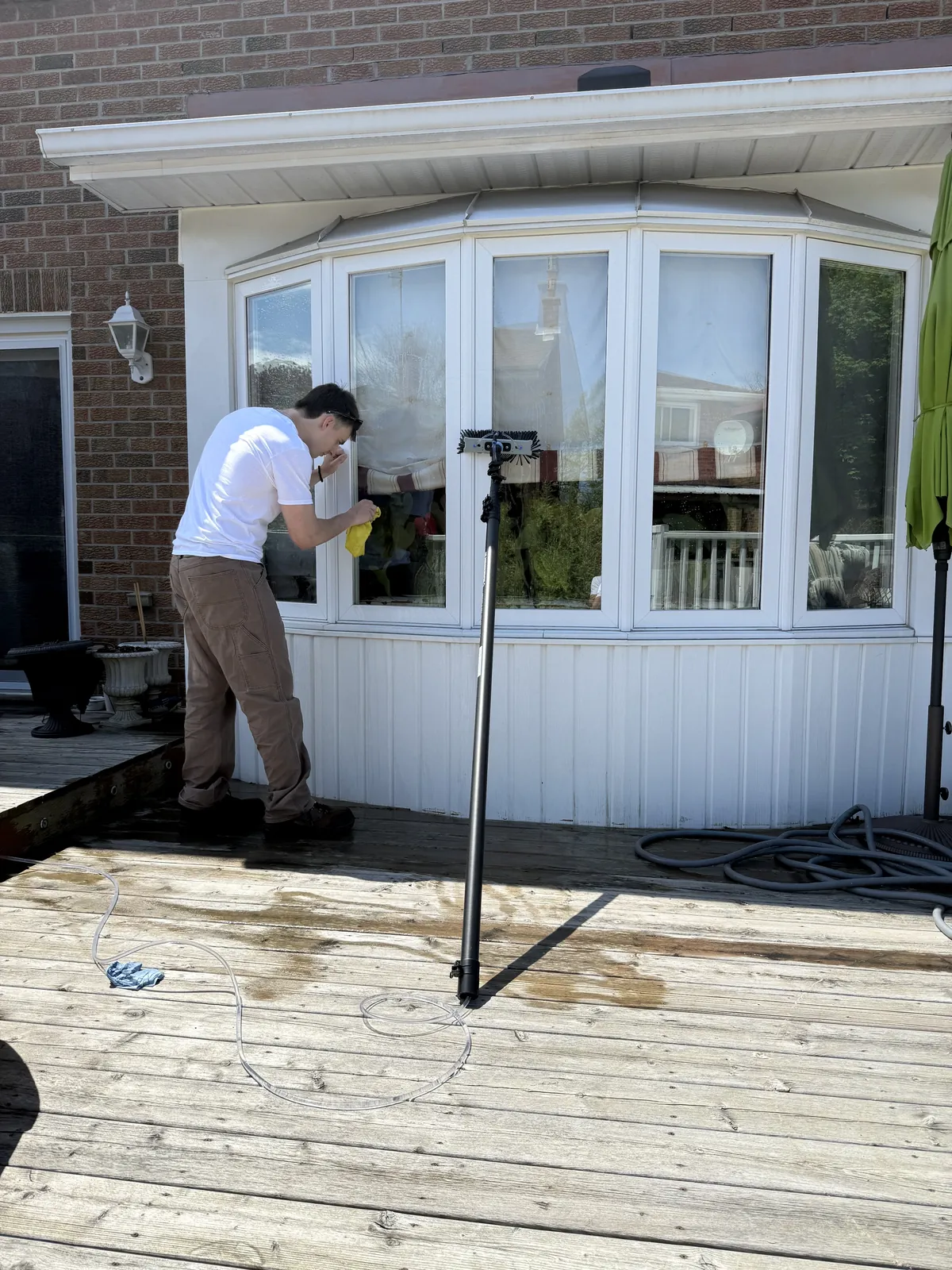
The Greater Toronto Area goes through real winter stress. Snow, slush, road salt, and traction sand are part of everyday life for months at a time. After a heavy season, that material does not stay on the road. It gets thrown into the air, carried through neighbourhoods, and deposited on the outside of homes.
That post-winter film is not just dirt. It is a mixture of salt, sand, silt, and moisture that can wear down glass, clog tracks, and accelerate wear on the surrounding window system.
Why winter residue builds up on GTA homes
Municipal winter maintenance relies heavily on salt and traction materials to keep roads, sidewalks, and public spaces safe. During and after storms, those materials mix with meltwater, soil, and vehicle spray to create a gritty slurry.
Once traffic picks that slurry up, it gets pushed well beyond the roadway. Homes near arterial roads, collector routes, plazas, and busy intersections often see the worst of it, but the problem is not limited to those areas. The residue spreads through residential streets and settles on siding, frames, gutters, and windows across the GTA.
What that residue can do to the window system
Most homeowners notice the visual issue first. Windows look cloudy, dull, or streaked even after a basic rinse. The more important issue is what happens when that material sits on the surface for too long.
- Salt holds moisture against the glass and frame
- Sand and silt create an abrasive layer
- Tracks collect compacted dirt and winter debris
- Moving parts face more friction and wear
- Seals and edges stay exposed to lingering contamination
That combination can reduce clarity, affect smooth operation, and shorten the useful life of the overall assembly if it is ignored season after season.
It is not just the glass
Homeowners often think post-winter cleaning is mainly about making the pane look clear again. In practice, tracks, sills, seals, and hardware are just as important.
When grit settles into the lower channels and corners of the window, it starts to pack down. Once that happens, simple opening and closing can grind the debris deeper into the working parts of the system. That is when windows begin to feel rough, sticky, or harder to move than they should.
Over time, neglected buildup can contribute to:
- Gritty or rough track movement
- Drainage issues in lower channels
- More wear on rollers and moving parts
- Added stress around seals and frame edges
Why spring is the right time to deal with it
For most GTA homeowners, the right time for a post-winter clean is April or May. That timing matters because it removes contamination after the last major winter events but before stronger spring and summer sun can bake residue into the surface.
Spring cleaning also resets the windows before the season when homeowners want more daylight, cleaner curb appeal, and windows that actually operate smoothly again. Waiting too long lets winter grime overlap with spring pollen and general exterior dust, which makes the cleanup harder and less effective.
If the snow season is clearly behind you and your exterior glass still looks hazy or gritty, that is your window to clean before the buildup gets worse.
Why a quick rinse often is not enough
A fast hose rinse seems like the obvious fix, but it often misses the actual problem. Dry winter grit turns into an abrasive slurry once it is soaked. If that slurry is rubbed across the glass or pushed deeper into the track, the cleanup can become counterproductive.
Common DIY mistakes include:
- Wetting the tracks before removing dry debris
- Dragging sand and silt across the glass surface
- Leaving behind hard-water spotting from tap water
- Cleaning the visible pane but ignoring the sill and track system
That is why post-winter service needs to be more detailed than a simple wipe-down.
What a proper post-winter clean should include
A complete spring window clean should deal with the whole system, not just the centre of the glass.
- Dry debris removal from tracks and sills first
- Safe breakdown of winter residue on the frame and glass
- Detail cleaning of corners, edges, and lower channels
- Removal of grit before it gets pushed into moving parts
- Clearer glass and smoother operation going into the warmer months
For many homes, this is also the ideal time to bundle window cleaning with gutter cleaning or broader exterior upkeep.
The maintenance cost is small compared with replacement
This is the part most homeowners care about once the issue is clear. Regular spring maintenance is a small cost compared with replacing damaged windows or repairing worn hardware years earlier than expected.
When buildup is allowed to sit too long, you are no longer paying for cleaning. You are paying for neglect. Preventative maintenance protects:
- Optical clarity
- Window operation
- Seal condition
- Exterior presentation
- Long-term property value
The bottom line
In the GTA, winter leaves more behind than snow. It leaves a film of salt, sand, and silt that can affect how your windows look, how they operate, and how well they hold up over time.
A post-winter window clean is not just cosmetic. It is a practical maintenance step that helps protect the home after months of exposure to winter residue.
If your windows still look cloudy, your tracks feel gritty, or the whole exterior feels dulled after winter, spring is the right time to reset it properly.