
Every spring, GTA homeowners start looking at roof streaks, dirty siding, stained concrete, and weathered decks and ask the same question: should this be pressure washed? The problem is that pressure washing has become a catch-all term for exterior cleaning, even though it is not the right approach for many parts of a home. In the wrong hands, or on the wrong material, high-pressure water does not just clean. It strips, etches, lifts, and forces water into places it should never go.
The right wash method protects the material while removing the contamination. The wrong method can turn a maintenance job into siding damage, roof wear, deck scarring, or hidden moisture issues behind the wall system.
What is the actual difference between pressure washing and soft washing?
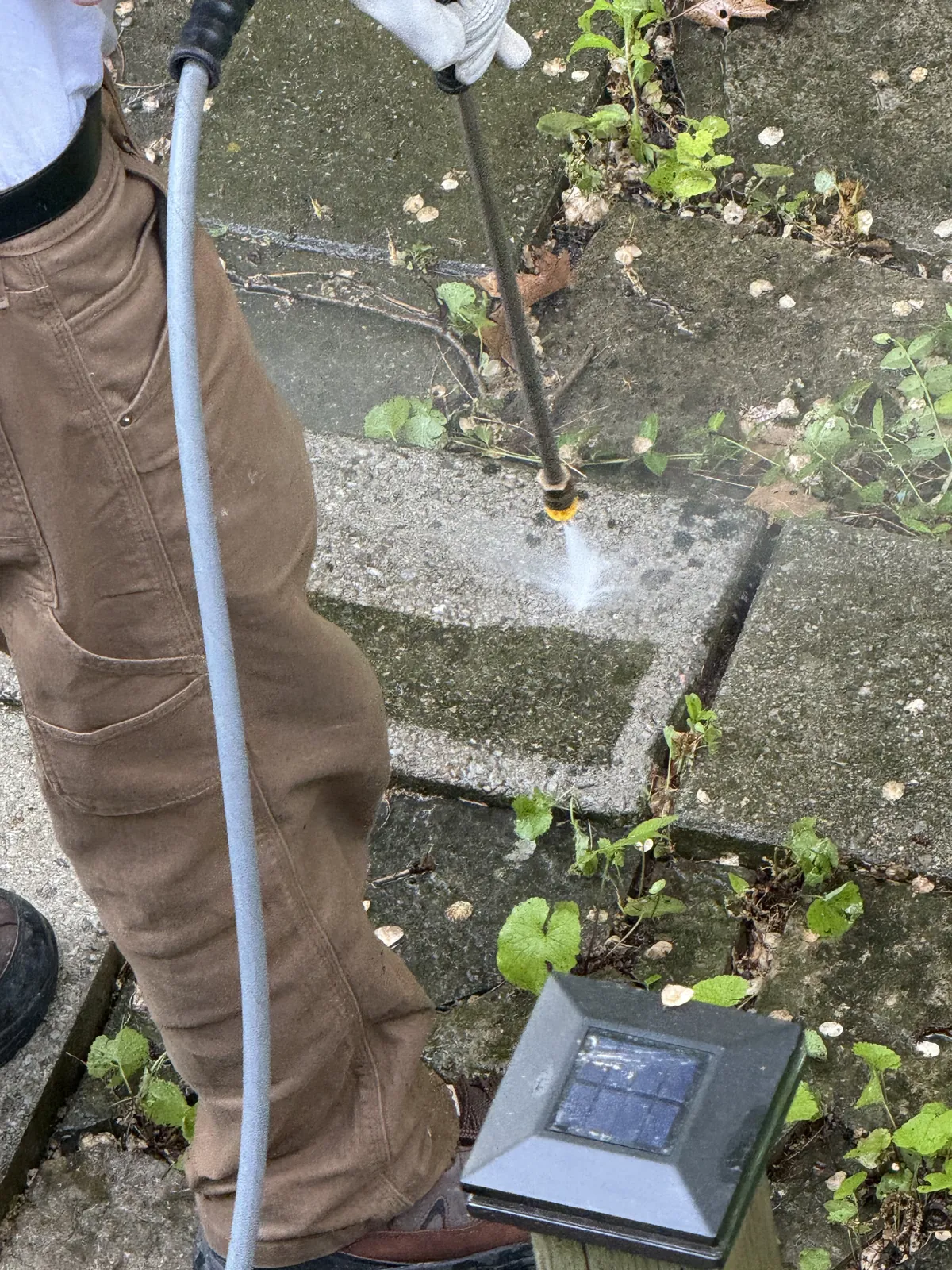
Pressure washing relies mainly on force. It uses high PSI to blast away dirt, grease, mud, and deeply embedded inorganic staining. That makes it effective on tough surfaces, but also far more likely to damage materials that are thinner, porous, painted, layered, or designed to shed water rather than resist direct hydraulic force.
Soft washing works differently. It uses much lower pressure and leans on cleaning chemistry, dwell time, and a high-volume rinse. Instead of trying to shear everything off with water force, it treats the contamination first and then washes it away gently.
That difference matters because most of the staining on homes is not just loose dirt. On roofs and siding, it is often algae, mold, mildew, and atmospheric buildup that needs to be treated, not blasted.
When pressure washing is the right choice
Pressure washing still has a clear place. It is the right tool when the surface is durable enough to handle strong mechanical cleaning and the contamination is heavy enough that low-pressure rinsing alone will not remove it effectively.
Typical good candidates include:
- Concrete driveways and walkways
- Heavy brick patios
- Stone surfaces built for hard wear
- Garage floors with deep-set grime
- Hardscapes with oil marks, mud, tire residue, or mineral buildup
Even then, technique matters. Excessive pressure, poor nozzle control, or rushing over pavers can still do damage by etching surfaces or disturbing joint material.
When soft washing is the better option
Soft washing is the safer and more appropriate choice for most residential upper-envelope surfaces. If the material can crack, lift, warp, splinter, fade, or trap water behind it, low-pressure chemical cleaning is usually the better method.
Soft washing is commonly the right fit for:
- Asphalt shingle roofs
- Vinyl siding
- Stucco and painted exteriors
- Wood siding
- Composite surfaces that should not be scarred by high pressure
It is also the better option when the problem is biological growth rather than embedded grit. Algae, mildew, and roof staining need to be neutralized at the source, not just removed from the surface visually.
Roofs and siding should almost never be treated like concrete
This is where homeowners make the most expensive mistake. An asphalt roof is not a driveway. Vinyl siding is not a patio. Stucco is not a garage floor.
High-pressure cleaning on these surfaces can lead to:
- Granule loss on asphalt shingles
- Lifted or weakened shingle edges
- Water forced behind vinyl siding
- Damage to paint, coatings, and finishes
- Splintering or furrowing on wood surfaces
- Water intrusion into hairline cracks in stucco
Once that damage happens, the surface may still look cleaner for the moment, but the material itself has been compromised. That is not maintenance. That is depreciation.
If the surface is layered, coated, painted, porous, or part of the weatherproofing system of the home, assume high pressure is a risk until proven otherwise.
What is actually making the surface look dirty?
Across the GTA, many dark exterior stains are biological, not just cosmetic. Roof streaking in particular is often caused by algae rather than simple dirt. Mold and mildew also show up on siding, shaded trim, decks, and other moisture-prone areas.
This is one reason soft washing matters. High pressure may remove the visible top layer, but it often does not solve the underlying problem. Soft washing is designed to treat and kill the organic growth so the surface stays cleaner longer.
That is especially relevant in Southern Ontario, where humidity, shade, tree cover, and freeze-thaw cycles create ideal conditions for recurring biological staining.
Why the GTA makes the method choice even more important
Toronto and the surrounding area put real stress on exterior materials. Winter salt, urban pollution, summer humidity, spring runoff, and frequent seasonal transitions all affect how surfaces age and how they should be cleaned.
Three local factors matter most:
- Winter salt and grime build up on lower siding, steps, and hardscapes
- Warm-season humidity drives mold, mildew, and algae growth
- Freeze-thaw cycles make porous or cracked materials more vulnerable to water intrusion
That means the best cleaning result is not just the one that removes the stain. It is the one that removes it without shortening the life of the material underneath.
Decks and wood surfaces usually need a controlled approach
Deck cleaning is where homeowners often see the difference between good cleaning and obvious damage. Too much pressure can leave visible wand marks, rip up soft grain, remove stain unevenly, and create splinters that change the surface completely.
That is why wood and composite deck cleaning usually works best with a more controlled process: chemistry first, then a careful rinse matched to the material and finish. The goal is to lift buildup without tearing into the surface.
The hidden cost of choosing the wrong method
The cost of exterior cleaning is minor compared with the cost of replacing or repairing damaged materials. A few hundred dollars saved on the wrong approach can easily turn into siding repair, wood restoration, roof wear, repainting, or moisture-related repair work.
The real comparison is not just service price versus DIY price. It is:
- Proper cleaning versus damaged cladding
- Safe roof maintenance versus shortened roof life
- Controlled deck cleaning versus permanent surface scarring
- Correct runoff handling versus avoidable water problems
For many homeowners, the more important question is not which method sounds stronger. It is which method preserves the material and avoids unnecessary repair costs.
A simple surface guide for GTA homes
If you want the practical version, use this rule set:
- Pressure washing: concrete, heavy stone, brick hardscapes, and other durable surfaces built to take force
- Soft washing: roofs, siding, stucco, painted surfaces, delicate trim, and most surfaces where force can create damage
- Hybrid or controlled approach: decks, composite materials, and surfaces that need treatment plus careful rinsing
When there is doubt, lower-pressure cleaning is usually the safer starting point.
The bottom line
Pressure washing and soft washing are not interchangeable. They solve different problems and belong on different surfaces.
Pressure washing is the right choice for strong hardscapes that need mechanical cleaning. Soft washing is the right choice for the parts of the home that are easier to damage and more likely to collect organic growth.
For GTA homes, the right cleaning method depends on the material, the stain, and the level of risk. If you use high pressure where it does not belong, the surface may look better for a moment, but the home pays for it later.