
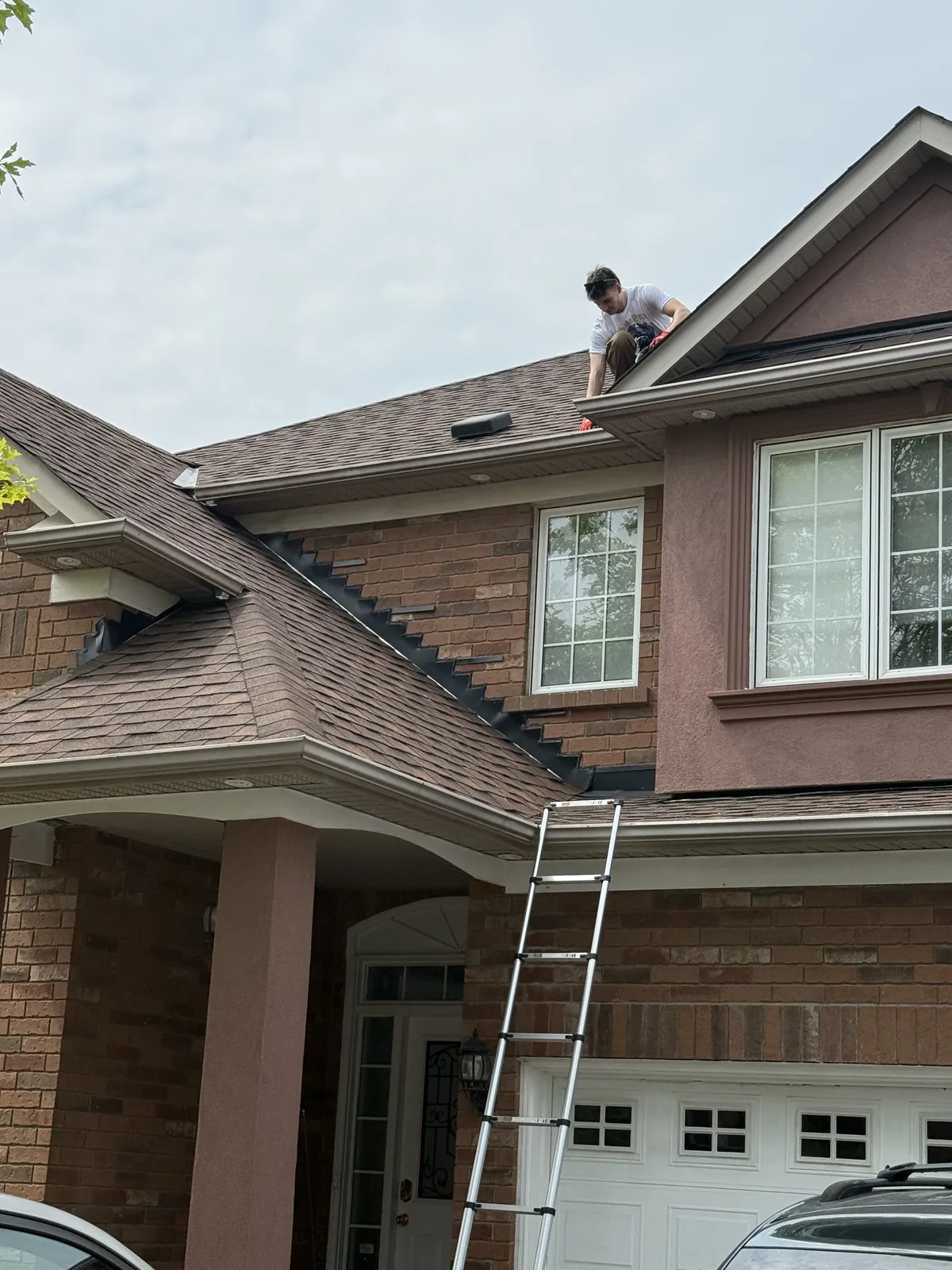
Across Toronto and the GTA, fall can bring long stretches of rain, backed by dense clay soils and neighbourhood drainage systems that are already under pressure. When gutters are clogged, sagging, or poorly draining, that water does not disappear. It gets dropped right beside the foundation, where it can slowly create structural and moisture problems that most homeowners do not notice until the repair is much more expensive.
A gutter problem rarely stays a gutter problem. Once runoff starts saturating the soil around the house, it can lead to erosion, basement dampness, settlement stress, and long-term wear on the foundation envelope.
Why gutters matter more than most homeowners think
A roof sheds a surprising amount of water in a normal storm. Even a modest home can move well over a thousand gallons of runoff in a single heavy rainfall. The gutter system exists to catch that water and send it away from the structure in a controlled way.
When the eavestrough is full of leaves, packed with granules, or pulling away from the fascia, that control disappears. Water starts spilling over the sides, running behind the gutter, or dumping too close to the home. In the GTA, where many properties sit on slow-draining clay-heavy soil, that runoff tends to stay near the foundation longer than it should.
1. Soil erosion, washed-out mulch, or splash marks near the foundation
The first sign is often outside at ground level. If water is pouring over the edge of the gutter, it hits the same spots repeatedly. Over time, that creates trenches in the soil, washed-out mulch beds, bare patches, and muddy splash marks on the lower wall.
What to look for:
- Channels or divots in the soil directly below the roofline
- Mulch pushed away from garden beds after rain
- Mud splatter on lower brick, siding, or parging
- Pools of water that sit close to the wall after a storm
If the landscaping near the foundation always looks disturbed after rainfall, the gutter system is likely dropping too much water in the wrong place.
2. Water pooling beside the house or soggy ground that stays wet
One of the clearest signs of trouble is ground that stays wet long after the rain stops. That usually means runoff is not being moved far enough away from the home, either because the gutter is overflowing or the downspout discharge is too short.
This matters because saturated soil is what drives pressure and moisture against the foundation wall. In GTA neighbourhoods with dense clay subsoil, the water can linger longer, which increases the amount of contact time around the base of the home.
What to check:
- Puddles near corners of the house
- Dark, soft ground beside the foundation after a light rain
- Downspouts that discharge too close to the wall
- Water running back toward the house instead of away from it
3. Basement warning signs like musty air, damp corners, or white staining
Not every foundation problem starts with visible flooding. Often the earlier signs show up inside as moisture symptoms. If runoff is soaking the backfill around the foundation, moisture can begin moving through the wall long before there is standing water on the floor.
Common early indicators include:
- A musty smell in the basement after rain
- Dampness or darker patches on lower basement walls
- White chalky staining known as efflorescence
- Paint or coatings that begin bubbling or flaking
Efflorescence is especially important because it shows that water is moving through the concrete and leaving mineral deposits behind. It is not a cosmetic issue on its own. It is evidence that moisture is getting where it should not.
If the basement smells different after rain or the wall starts showing white residue, do not treat it as an isolated interior issue. Check the roofline, the gutter pitch, and where the downspouts are actually sending water.
4. New cracks, sticking doors, or signs of uneven movement inside the home
When soil around part of the foundation becomes repeatedly saturated and then dries out, it can expand and contract unevenly. That is one way minor gutter issues turn into structural ones over time.
You do not need a dramatic foundation failure to have a real problem. Early signs can include:
- Small cracks in basement walls that seem to be growing
- Diagonal drywall cracks near windows and doors
- Doors that suddenly stick or fail to latch cleanly
- Windows that feel tighter or harder to open than before
These issues do not automatically mean the house is in severe structural distress, but they do mean water management deserves a serious look. If the movement is local to one side or one corner of the home, failed drainage is often part of the story.
5. The gutter system itself is sagging, overflowing, or pulling away from the roofline
Sometimes the best clue is the gutter itself. A system that is full of debris, holding standing water, or pulling away from the fascia is already under too much load. Once the pitch is lost, the gutter stops draining properly and starts dumping water exactly where it should not.
What to look for:
- Sections that visibly sag in the middle
- Water spilling over the front edge in moderate rain
- Staining or streaking on fascia and soffits
- Rust, separated joints, or plant growth in the trough
- Rotting wood or pest activity near the roofline
By the time gutters are visibly deforming, the system is not just due for cleaning. It needs proper inspection, runoff correction, and possibly fastening or pitch repair.
Risk Assessment Quiz
What is your home foundation risk score?
Answer four quick questions and get an instant risk rating before the next big rainfall. This is built to highlight the same warning signs homeowners tend to miss until runoff has already become a bigger problem.
Question 1: How many mature trees are within 20 feet of your home?
Taller trees usually mean more leaves, seed pods, and debris landing in the gutter line.
Question 2: Do you have a basement, and have you noticed any damp smells?
Basement air quality is often one of the earliest clues that runoff is staying where it should not.
Question 3: Can you see "tiger striping" on the outside of your gutters?
Those black vertical lines usually mean water, debris, and oxidation have been sitting on the system for too long.
Question 4: When were your gutters last cleared?
The longer it has been, the higher the odds that overflow, standing water, and blockages are already developing.
Home Foundation Risk Score
Your current gutter risk is manageable, but not something to ignore.
Based on your answers, the home is showing signs that runoff risk could build if the system is left unchecked. A preventative cleaning before the next major rainfall is the safest next step.
How to spot these issues before the fall rains arrive
Late summer and early fall are the right time to check the system before a longer rainy stretch starts. You do not need specialized tools to catch the common warning signs.
- Walk the perimeter after a normal rain and look for splash zones and pooling
- Check whether downspouts actually move water away from the house
- Look inside the basement for musty air, residue, or damp corners
- Stand back and inspect whether gutter lines look straight and supported
- Look for soil washout, exposed roots, or mulch movement under roof edges
If you want a faster answer, the easiest test is to inspect during or just after rainfall. Water tells you very quickly whether the system is controlling runoff or just relocating the problem to the foundation line.
What to do if you spot one or more of these signs
Start with the roof drainage system. If the gutters are clogged, sagging, or poorly pitched, that has to be corrected first. Otherwise any grading, sealing, or interior moisture work is only addressing the downstream symptom.
In most cases, the right next steps are:
- Clear debris from gutters and downspouts
- Confirm water is flowing to the exits without holding in the trough
- Extend discharge away from the house where needed
- Inspect fascia and surrounding wood for moisture damage
- Bring in a foundation specialist if cracks or basement moisture are already advancing
The goal is not just to stop overflow during the next storm. It is to break the cycle of repeated saturation around the structure.
The bottom line
When gutters fail, the damage usually starts quietly. The warning signs are not always dramatic, but they are there: disturbed soil, standing water, basement moisture, hairline movement, and a roofline that is no longer draining properly.
For homeowners across Toronto and the GTA, catching those signs before the fall rains matters. It is much cheaper to correct runoff now than to deal with long-term foundation repairs later.
If your gutters are overflowing, sagging, or sending water back toward the house, the right fix is not to wait for the next major storm. It is to correct the drainage path before the structure pays for it.